
How to Develop Critical Thinking Skills in Children
Last updated: 28 August 2026
Critical thinking is one of the most important skills a child can develop. It helps them analyse information, solve problems, make decisions, and form their own views — abilities they will use every day at school, at home, and throughout their lives.
The good news is that critical thinking is not something children are simply born with or without. It can be taught, practised, and strengthened at any age. Here is how.
What Is Critical Thinking?
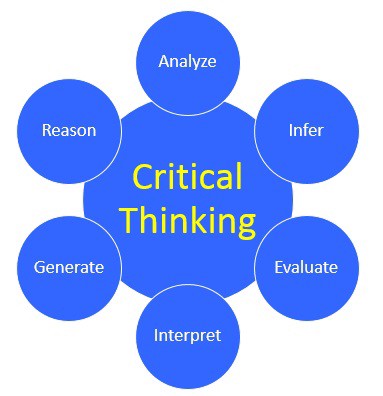
Critical thinking means looking at information carefully before accepting it. Instead of just memorising facts, a critical thinker asks questions like:
- Is this true? How do I know?
- What evidence supports this?
- Could there be another explanation?
- What would happen if I tried a different approach?
In her book Mind in the Making, researcher Ellen Galinsky identifies critical thinking as one of seven essential life skills every child needs. She argues that while children need to learn facts and concepts, they also need the ability to evaluate, analyse, and apply what they learn.
Why Critical Thinking Matters at School
The modern curriculum increasingly rewards critical thinking. In GCSE English, students must analyse texts and evaluate arguments. In science, they design experiments and draw conclusions from data. In maths, multi-step problem-solving questions test reasoning, not just calculation.
Children who can think critically tend to:
- Perform better in exams that require analysis and evaluation.
- Write stronger essays with well-supported arguments.
- Approach unfamiliar problems with confidence rather than panic.
- Become more independent learners who do not rely on being told what to think.
7 Ways to Encourage Critical Thinking at Home
1. Ask Open-Ended Questions
Instead of questions with a yes/no answer, ask questions that require thought:
- “Why do you think that happened?”
- “What would you do differently next time?”
- “How do you know that is true?”
- “What might happen if…?”
These questions teach children to reason and explain, not just state facts.
2. Let Them Struggle Before Helping
When your child faces a challenge — a tricky homework question, a puzzle, or a disagreement with a friend — resist the urge to solve it for them immediately. Give them time to think it through. Struggling with a problem (within reason) is how critical thinking develops.
You might say: “I can see this is hard. What have you tried so far? What else could you try?”
3. Encourage Them to Consider Different Perspectives
When reading a story or watching the news together, ask: “How might the other person feel?” or “Why might someone disagree with this?” This builds empathy and teaches children that most situations have more than one valid viewpoint.
4. Play Strategy Games
Board games and card games that require planning and decision-making are excellent for critical thinking. Games like chess, draughts, Cluedo, and Settlers of Catan force children to think ahead, weigh options, and adapt their strategy based on new information.
5. Discuss Real-World Problems
Talk about everyday decisions as a family: “We need to plan meals for the week — what should we consider?” or “Should we drive or take the train? What are the pros and cons?” Involving children in real decisions gives them practice with reasoning and evaluation.
6. Encourage Curiosity and Research
When your child asks a question you do not know the answer to, look it up together. Show them how to find reliable information, compare sources, and check facts. This builds the habit of investigating rather than accepting the first answer they find.
7. Model Critical Thinking Yourself
Children learn by watching. When you are making a decision, talk through your reasoning out loud: “I am going to compare these two options because…” or “I read this article, but I want to check another source before I believe it.” This normalises the process of thinking carefully.
Critical Thinking Activities by Age
Ages 5–7 (KS1)
- Sorting and classifying: Give your child a set of objects and ask them to sort them into groups. Then ask: “Can you sort them a different way?”
- Story predictions: While reading a book, pause and ask: “What do you think will happen next? Why?”
- Spot the odd one out: Show four items where one does not belong and ask them to explain their reasoning.
Ages 7–11 (KS2)
- Debate topics: Pick a simple topic (“Should children have homework?”) and ask them to argue both sides.
- Mystery puzzles: Present a scenario with clues and ask them to work out what happened.
- News discussion: Read a child-friendly news article and ask: “What is the main argument here? Do you agree?”
Ages 11–16 (KS3 and KS4)
- Source evaluation: Show two articles on the same topic from different sources. Ask: “Which is more reliable? How can you tell?”
- Ethical dilemmas: Discuss scenarios where there is no clear right answer — this develops nuanced thinking.
- Study groups: Encourage them to explain topics to friends. Teaching someone else is one of the best ways to deepen understanding.
How StudyBox Develops Critical Thinking
Related Reading
- Signs Your Child Needs a Tutor
- When Should My Child Start Tutoring?
- How to Help Your Child with Maths at Home
- Phonics: A Complete Guide for Parents
- Is Private Tuition Worth It? What the Evidence Says
At StudyBox, we do not just teach children what to think — we teach them how to think. Our tutors ask probing questions, encourage independent problem-solving, and guide students to explain their reasoning. This approach builds deeper understanding that lasts far beyond the next test.
Book a free trial lesson at one of our centres in Wallington, Sutton, or Croydon.
