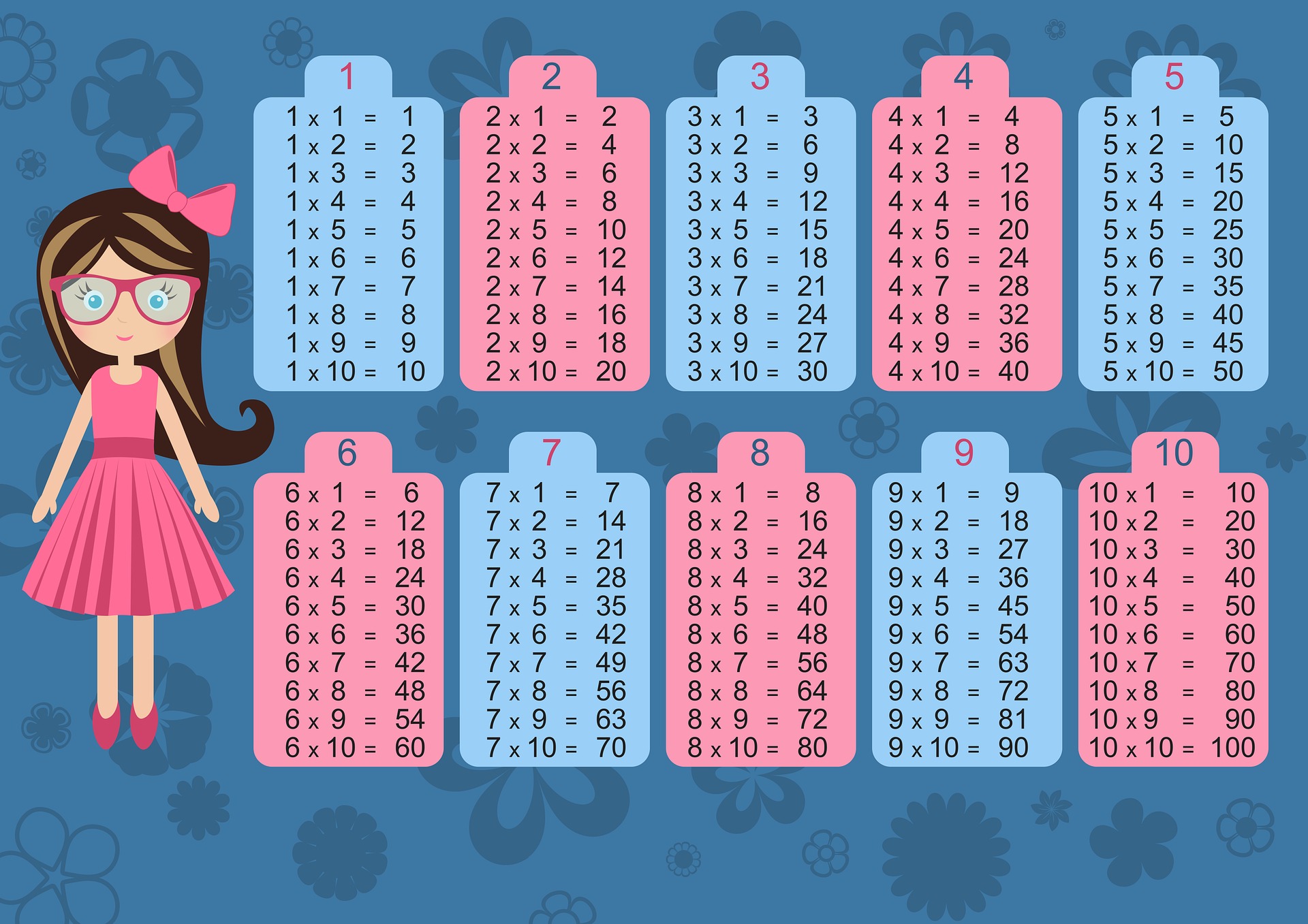
The Multiplication Tables Check (MTC) is a national test taken by all Year 4 pupils in England every June. If your child is approaching Year 4, here is everything you need to know about the test, how it is scored, and how to help your child prepare with confidence.
What Is the Multiplication Tables Check?
The MTC was introduced by the Department for Education to make sure children have a solid grasp of their times tables by the end of Year 4. Knowing multiplication facts fluently is one of the most important foundations in maths — it underpins long division, fractions, percentages, algebra, and much more.
The check is not designed to cause stress. It is a short, low-pressure online test that helps teachers identify which children may need extra support before they move into upper Key Stage 2.
How the Test Works
The MTC is taken on a computer or tablet in school. Here is the format:
- 25 questions — each is a multiplication fact from the 2× to 12× tables.
- 6 seconds per question — a new question appears automatically after each answer.
- On-screen number pad — children type their answer using a number pad on screen.
- 3-second pause between questions to give a brief rest.
- Total time: around 5 minutes from start to finish.
The questions are generated to cover the full range of tables, with a heavier weighting on the 6×, 7×, 8×, 9×, and 12× tables, as these are typically the hardest to learn.
How Is the MTC Scored?
Each correct answer scores one mark, giving a maximum score of 25 out of 25. There is no pass or fail — the score simply tells the school how well your child knows their tables. Results are shared with parents at the end of the school year, usually alongside the annual report.
Nationally, the average score tends to be around 20 out of 25, with many children scoring full marks. If your child scores lower, it simply highlights which tables need more practice — there is nothing to worry about.
Which Times Tables Are Tested?
The check covers multiplication facts from 2× to 12×. However, the questions are not evenly distributed. The harder tables appear more often:
- Higher weighting: 6×, 7×, 8×, 9×, 11×, and 12× tables
- Lower weighting: 2×, 3×, 4×, 5×, and 10× tables
This means your child should be confident across all tables, but extra practice on the 6–9 and 12 times tables will give them the biggest advantage.
When Should Your Child Start Preparing?
The national curriculum expects children to know all their times tables up to 12×12 by the end of Year 4. However, times tables learning begins much earlier:
- Year 1: Count in 2s, 5s, and 10s.
- Year 2: Learn the 2×, 5×, and 10× tables.
- Year 3: Learn the 3×, 4×, and 8× tables.
- Year 4: Complete all tables up to 12×12 and take the MTC in June.
Starting regular practice in Year 3 gives your child a full year to build fluency before the check.
How to Help Your Child Prepare at Home
1. Little and Often Beats Cramming
Five to ten minutes of daily practice is far more effective than long weekend sessions. Repetition is the key to committing times tables to long-term memory. Try practising during the car journey to school, at breakfast, or before bed.
2. Start with the Easier Tables
Build confidence by mastering the 2×, 5×, and 10× tables first. Then move on to 3× and 4×, using the idea that 4× is simply double 2×. Once these are secure, tackle the trickier 6×, 7×, 8×, and 9× tables.
3. Use a Times Table Grid
A printed multiplication grid (sometimes called a times table square) is a brilliant visual tool. Children can use it to spot patterns — for example, they will notice that the 9× table digits always add up to 9, or that the 5× table always ends in 0 or 5. Print one out and stick it on the fridge or in their bedroom.
4. Make It Fun with Games and Apps
Turn practice into a game. Try:
- Times table bingo — call out questions and children cover the answer on a grid.
- Speed challenges — how many can they answer correctly in 60 seconds?
- Online apps — apps like Times Tables Rock Stars, Hit the Button, and Topmarks make practice engaging.
- Card games — use a deck of cards: flip two cards and multiply them together.
5. Focus on Tricky Facts
Most children find the same facts difficult. These are the ones to drill most often:
- 6 × 7 = 42
- 6 × 8 = 48
- 7 × 8 = 56
- 7 × 9 = 63
- 8 × 9 = 72
- 12 × 7 = 84
- 12 × 8 = 96
6. Teach Useful Tricks
Simple shortcuts help children who get stuck:
- 9× table finger trick: Hold up 10 fingers. For 9 × 4, fold down the 4th finger — you have 3 fingers to the left and 6 to the right, giving 36.
- Doubling strategy: If your child knows 3 × 6 = 18, they can work out 6 × 6 by doubling 18 to get 36.
- Commutativity: Remind them that 7 × 8 is the same as 8 × 7 — so learning one fact gives them two.
What to Do on Test Day
The MTC is designed to be straightforward. On the day:
- Make sure your child has a good breakfast and arrives at school feeling calm.
- Remind them there is no pass or fail — it is just a check.
- Encourage them to move on quickly if they do not know an answer, rather than using up the full 6 seconds worrying.
Related Reading
How StudyBox Can Help
At StudyBox, we build times tables practice into every maths lesson. Our tutors use a combination of timed drills, interactive exercises, and personalised worksheets to make sure each child is confident and fluent. Whether your child needs to start from scratch or just wants to sharpen the trickier tables, we can help.
Book a free trial lesson at one of our centres in Wallington, Sutton, or Croydon and see the difference focused practice makes.