
Adjusting from primary to secondary school

Child sat at computer being tutored.

Starting secondary school is a milestone in every child’s life. It signifies the path into adolescence and taking on more responsibilities. Adjusting from primary to secondary school can be daunting, as there are many large changes that a child undergoes. For example, they go from being the oldest to the youngest year group in school.
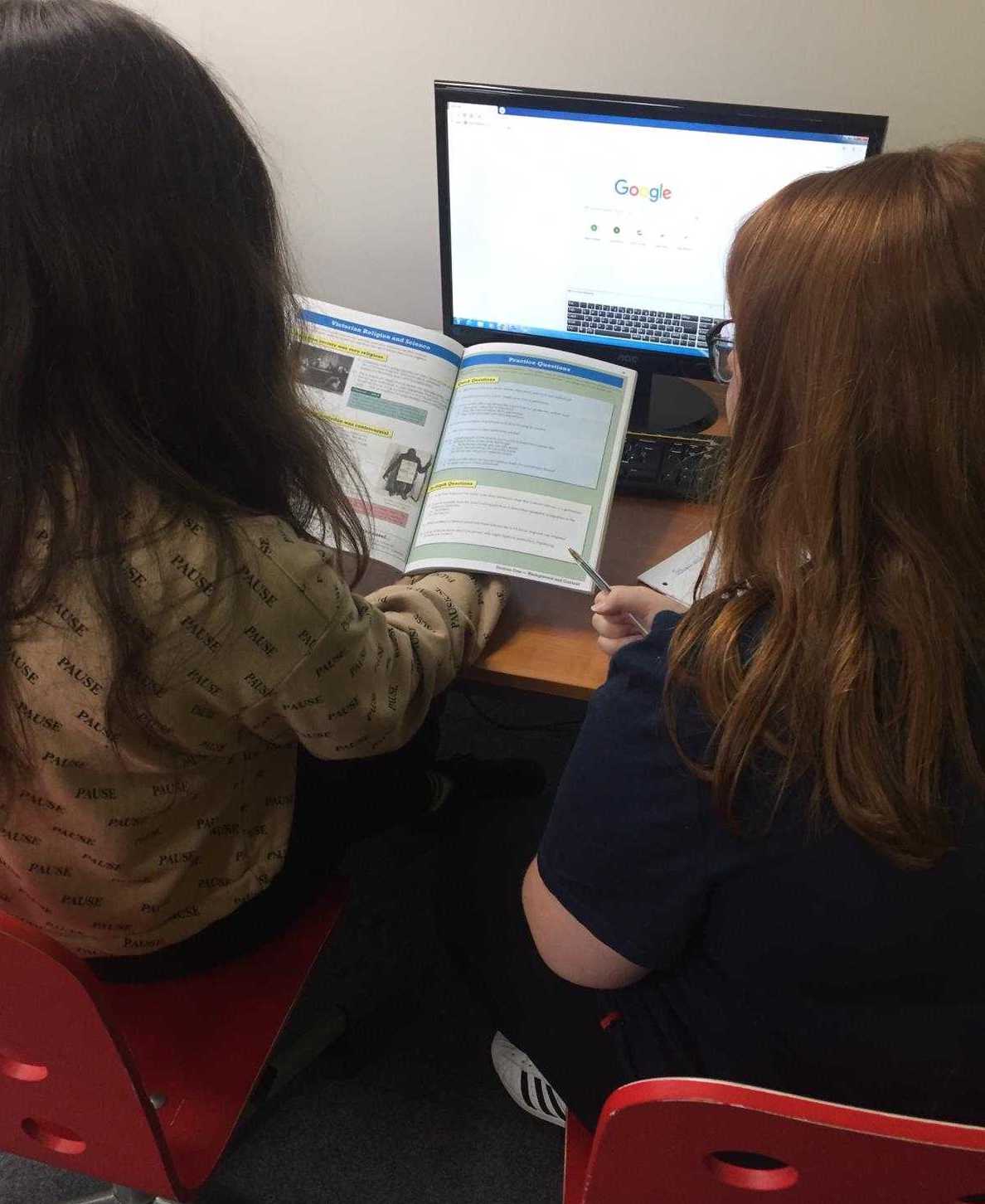
 

The major changes that children will adjust to are:


  • Larger classes

Secondary schools usually accommodate many more students than primary schools do. The average secondary school has 948 students, and primary schools 281. Therefore, the class sizes in secondary schools tend to be larger. Additionally, there are multiple, subject-specific teachers in secondary school. This can be daunting for new Year 7 students who are used to one teacher for every subject, especially those coming from smaller schools.

  • New Students

While there may be some familiar faces, there are hundreds of new students joining secondary school who will be unfamiliar. Making friends may be intimidating at first, with different students in every class, unlike primary school with one class throughout the whole time at school. Once students settle in and adapt to the changes, making friends should become easier.

  • Syllabus

The subjects will now become harder, moving up from Key Stage 2 to Key Stage 3. There will be more content, as well as tests and mocks to revise for. The reading and homework will also be more demanding.

  • Structure

Secondary school requires organisation in order to meet deadlines, therefore students will learn to be more independent when adapting to this change. Students will have multiple books and textbooks for each subject, and will need to pack their school bag daily for the following day.


How can students successfully adapt to these changes?


  • Organisation

In order to make the transition smooth, being organised is vital. This includes packing a school bag the night before, knowing key academic dates and staying on top of the  work load.

  • Routine

Establishing a daily routine will allow students to structure their day, as well as gain time management skills. Setting a time for completing homework, a time for bed and a time for relaxation, will make staying on top of everything stress-free.

  • Planning ahead:

There will be many important dates to remember, so why not purchase a planner or calendar to ensure they are all recorded and not forgotten?  Alternatively, make a poster or timetable and display it somewhere visible, like the kitchen or bedroom.

  • Stay up-to-date

The new academic year is a fresh start, so stay on top of the workload early on, to avoid falling behind. Do homework as soon as it is set, and complete additional learning exercises if possible! This will reduce stress and improve organisation.

  • Teachers and classmates

Get to know teachers and classmates in each subject. If additional help in certain areas is needed, it may be useful to find a study buddy to complete work with, or ask the teacher support. Sometimes teachers run after-school clubs in their subject areas, so find out the times and dates to attend, for that extra boost.

  • After-school tuition

If adjusting to the new secondary school workload is proving challenging, consider attending after-school tuition to stay on top and excel in school. StudyBox Tuition provides personalised lessons to students in maths, English and science, helping with confidence and tough subject areas.


 

To make adjusting from primary to secondary school that little bit easier, book a lesson with StudyBox today on 02086428884. Alternatively, sign up here for a free trial!

How to give your child an extra boost with learning

Apple on top of books with building blocks next to it.

A child’s most important role model and teacher is their parent. A parent takes on board many job roles, asides from providing for their child, they are also responsible for educating and eventually preparing their child for the real world. In order for parents to give their child an extra boost with learning, it is important that they are well acquainted with their child’s timetable, in order to support them academically throughout their time at school.

Follow these tips on how to keep up-to-date with your child’s learning:

  1. Monitor progress

Stay in the loop with your child’s progress at school. This will allow you to support them in difficult subject areas and encourage them with subjects they are progressing in. Ask them what went well with their day and what they are finding more challenging. Follow up on this by giving them an extra boost when needed and rewarding progress.

  1. Stay connected

Stay connected with your child’s school by getting to know their teachers and going to all parent-teacher conferences. Ask the school what you can do to help your child if they are struggling in any areas. Attending every parents evening will further keep you up to date, through discussing progress between the parents, teacher and child. Checking regular report cards will give an indication as to where your child is academically, based on mock exams and in-class tests.

  1. Keep up to date

Knowing their timetable and upcoming tests and exam dates is necessary for monitoring progress. This will ensure your child stays on top of revision and fully prepares for important exams.

  1. After school assistance

Helping your child prepare for exams is necessary for giving them that extra boost in school. Statistics show that you are 50 percent more likely to remember something you’re revising by saying it aloud. Perhaps try reciting the material together and testing your child on the syllabus through a question and answer format. Help with homework and ensure this is completed by the deadline. Also encourage extra-curricular activity, like leisurely reading, online educational activities and sports.

  1. Arrange additional help if needed

Being a parent is a full-time job; sometimes it is difficult to find the time to support your child whilst balancing everything else. Attending after-school tuition will establish a routine in a learning environment and free more time in a busy parent’s schedule, in order to give your child an extra boost with learning. StudyBox Tuition provides one-to-one support in maths, English and science, tailoring lessons to the individual and building skills and confidence.

StudyBox has centres in Croydon, Sutton and Wallington, with two new centres opening soon in Epsom and Battersea. You can book a free trial here. Alternatively, call one of our centres to find out more, on: 02086428884.

The importance of reading for pleasure

Open book with animated letters floating up from it.

The importance of reading for pleasure should be implemented from a young age. Reading has numerous benefits to health, concentration and learning.

Last week celebrated #NationalReadaBookDay and #InternationalLiteracyDay. It certainly honoured the importance of reading.

Here’s why you should encourage your child to read for pleasure:

  1. Studies show that reading makes a difference to educational performance

Reading expands vocabulary and increases general knowledge. Not to mention developing language and communication skills which are useful for life.

  1. Reading inspires imagination and creativity

When we read, we gain an insight into another fictional world. We follow the author’s thoughts and we use our own imagination to interpret characters and other worlds. It allows us to expand on our creativity and gain inspiration from other’s ideas.


  1. Reading improves empathy

A study called “Mind the Eyes,” by Dr. Oatley and Dr. Mar, found that people who read fiction are able to empathise with others more effectively. The study consisted of participants reading fiction and non-fiction, then examining a collection of photographs of people’s eyes. The aim was to identify the expression of each pair of eyes from a short list, including shy, guilty and worried. Those who read fiction were able to more accurately identify the expressions over the non-fiction readers.

  1. Reading improves focus and concentration

Reading involves the use of several brain functions, improving the brain’s connectivity. We are able to stop, think and process the story all at once. It is a form of escapism, allowing us to switch off and focus solely on one thing.

  1. It reduces anxiety and stress

A study from the University of Sussex found that six minutes of reading reduces stress by 68%, being more relaxing than listening to music or having a cup of tea. This is because reading is more than a distraction, Dr. David Lewis states that it is ‘an active engaging of the imagination.’

The importance of reading for pleasure links to educational benefits, creativity and stress-reduction. If your child needs extra support in English, encouraging reading for pleasure will help with vocabulary, concentration and focus, to name but a few. Additionally, StudyBox offer one-to-one support with maths, English and science tuition.

Book your free trial here. Alternatively, call one of our centres in Croydon, Sutton or Wallington on: 02086428884.

Start off the year right

A light bulb with education symbols around it

The academic year is upon us once again; it is important to start off the year right. The new syllabus is more challenging, so it is important to stay on top of the workload early on. It can be difficult for both children and parents to adapt to routine and get back into learning mode.

Follow these top tips on how to start off the year right.

  1. Encourage reading for pleasure.

Find a genre your child enjoys and help them choose a book. Set aside twenty minutes before bed to wind down from a busy day and read.

  1. Establish a routine.

Routine helps with organisation and time management. It starts from the minute your child wakes up until they go to bed. Set a time for breakfast, encourage them to pack their schoolbag the night before, a time for doing homework and for dinner. Once a routine is in place, days will be structured and tasks will be complete. Perhaps make a timetable and put it on display somewhere visible, as a reminder.

  1. Help determine your child’s plans and goals.

Setting goals early on will ensure time for reaching these goals. Whether it’s achieving top marks in mock exams, staying on top of the workload or improving on difficult areas, it will take time and dedication. That’s why setting goals is a step closer to achieving them.

  1. Create a working environment.

Dedicate an area for studying and completing school work, either at the kitchen table or in the study. Ensure this space is quiet and equipped with relevant supplies like stationary and paper. If there’s nowhere quiet in the house, find a local library or café to complete work.

  1. Try something new.

A break from academia is important for de-stressing, so find what your child is passionate about. Whether it’s drawing, sports or music, encourage them to pursue an extra-curricular activity.

  1. Attend additional tuition.

If your child is struggling in certain areas or needs an extra push, why not try additional tuition? StudyBox is a tuition company that offers one-to-one support in maths, English and science. Be one step closer to excelling in exams with StudyBox.

If you want to get a head start in September, sign up for StudyBox today! Book your free trial here. Alternatively, call one of our centres in Croydon, Sutton or Wallington on: 02086428884.

How to get a head start in September

Pencils lined up with text reading

Are you wondering how to get a head start in September for your child?

Starting the new academic year can be stressful. Especially for students going into Year 10 and 11, about to start their GCSE preparation and exams. It can be daunting not knowing what to expect.

Beginning GCSE preparation as early as possible is essential for receiving good grades. Here are some useful tips for succeeding in exams.

Attend additional tuition

After-school tuition at StudyBox provides one-to-one support and customised lessons to each child. Therefore, our  tutors are able to evaluate and focus on which areas that the student finds difficult. The sooner the student starts revision, the better they are able to grasp the topic. StudyBox offers GCSE, SATs and 11+ tuition.

Short, regular study intervals

A study by Dr. Dave Haylock shows that regular revision in short intervals is the most effective way to revise. ‘Revise little but often,’ Haylock suggests, which will also reduce stress. This effect is known as “spacing,” which allows the material to be remembered again once revisited.

Start revision early

Dr. Cecile Brich says it is vital to ‘start your revision early.’ Keep up with the workload and make notes as you go. Remember to write clear notes in class and build on these notes using revision guides. ‘This is not something you can do well by cramming the night before. Working regularly and keeping notes up to date makes revision much more effective and much less stressful,’ Dr. Brich advises.

Set a timetable

A revision timetable is an effective way to keep organised and on top of revision. Dedicate a few hours per day for each subject and stick to it.

Find a method that suits you

Everyone learns differently. If you are unsure how to revise, test these different methods until you find what works best for you:

  • Mind map: Write the subject in the middle, then the topic coming off the first branch. Branching off from this, write keywords and bullet points to trigger the material.
  • Colour coding: Write the topic as the heading and subtopics underneath. Bullet point the material in short sentences. Use different colour pens or highlighters and colour code each topic.
  • Flashcards: Write each topic on a flash card. Bullet point the information underneath each topic. Read the cards throughout the day and take them with you wherever you go.
  • Reciting: Ask a relative or friend to test you on the material, having you repeat the information back to them.

Break down each subject

The GCSE syllabus consists of multiple subjects, each containing in-depth material to revise. In order to make the workload bearable, it is recommended to break each subject down into topics. This way, the workload seems less daunting and each topic can be ticked off a list once completed. It is also easy to return later to the topics that are more challenging.

If you want to get a head start in September, sign up for StudyBox today! Book your free trial here. Alternatively, call one of our centres in Croydon, Sutton or Wallington on: 02086428884

GCSE Results Day 2019

GCSE results day this year falls on Thursday 22ndAugust 2019.

This week, students across the country awake with anticipation to find out what grades they have received in their GCSE exams.

Students can collect results from their school on the morning, usually from 10am. Results can also be received via email from 8am, if requested from the school.

What is the importance of GCSEs?

GCSE results signify the end of secondary education and determine the next step. Whether it’s continuing higher education and starting A Levels, doing an apprenticeship, or going into full-time work, there are plenty of options.


What happens when my child receives their GCSE results?

On GCSE results day 2019, students will find out whether they’ve received their predicted grades and have been accepted into their 6th form or college of choice, should they wish to continue into higher education. They will also find out whether they are accepted onto their chosen A Level subjects.

Back-up options are also selected when applying for 6th form or college. This is in case a student doesn’t receive the predicted grades to get accepted into their first choice.

New GCSE Grading System

This is the second year that the numerical grading system has been implemented. Grades rank from 1-9, (where 1 is the lowest and 9 highest), in order to differentiate amongst the brightest students. Read more about it here.

What if my child doesn’t receive their predicted grades?

If a student doesn’t achieve their predicted grades, there is no need to panic – there are plenty of other options available. Contacting the 6thform or college and finding out about other options is advised. Sometimes, the institute will accept lower grades, or offer an alternative subject to study. Another option is requesting a paper remark from the exam board, at a charge. This comes with a risk of the grade being marked lower than the original received grade, however. If a student thinks they have been marked incorrectly, they can appeal an exam result. This can be done by asking the school to get the result looked at again, or requesting it from the board themselves.

Alternatively, exam resits take place in November 2019. Asking the school for information about exam resits is the best way of finding out the details. StudyBox offers tuition for GCSE resits in November, simply call one of the centres in Croydon, Sutton or Wallington to enquire.

If none of the above options are possible, it could be worth changing a career plan and exploring something new, like doing an apprenticeship or considering BTEC qualifications.

Good luck to everyone on GCSE Results Day 2019! But if the results were different to what was expected, don’t panic. There are always plenty of other options to consider.

Call StudyBox today on 02086428884 or sign up online for a free trial!

International Youth Day 2019

International Youth Day 2019

International Youth Day 2019 brings to attention the 1.8 million young people in the world. This is the largest youth population there has ever been, making a sixth of the human population.

From this figure, 1 in 10 of the world’s children live in conflict zones. 24 million are out of school. As a result of this, there is an increasing isolation of youth in societies, due to conflict and political instability. It is easy to forget that education is a privilege which not everyone has access to.

The 2019 theme of International Youth Day is ‘Transforming Education.’ At StudyBox, we believe that education is imperative for paving a better future. This is why we support, motivate and challenge our students to help them get where they want to be.

This year’s Transforming Education theme highlights efforts to make education more inclusive for all, including efforts from youths themselves.

Education is necessary for diminishing poverty, achieving gender equality and improving job prospects. As a result, the government, youth and youth-led organisations  are working together. They aim to transform education into a fundamental tool for all.

Currently, “only 10% of people have completed secondary school education in low income countries.” Moreover, “40% of the global population are not taught in a language they speak or fully understand.” (United Nations)

Quality education plays a crucial role in youth development, which is why constant learning from a young age is important for shaping and growing the individual. StudyBox offers maths, English and science tuition, as well as a coding course. Our courses include the 11+, GCSEs, SATs, mocks, which is all important for paving the path to the next step in life, be it secondary school or GCSEs.

Book your free trail here, or call us on 02086428884 today!

National Playday 2019

Colouring With Crayons

The 7th August is National Playday 2019! This special day highlights the importance of play in children’s lives.

On this day, children are particularly encouraged to participate in local community events, which are created specifically for National Playday. Alternatively, children can have fun with their own activities at home, or visit a local park.

The 2019 Playday theme is ‘play builds children.’ Children learn and grow through play, so it is important for them to have fun and develop in this way.

At StudyBox we offer a Kids Coding Lab course, where children can program and play with robots. We also run maths and English tuition sessions, so children can keep their minds active as well, this summer. We are open throughout the summer from the 22ndJuly – 31stAugust, from 10am until 2pm. Why not book a free trial this week at our Croydon centre, Kidspace, and enjoy one hour of free play to celebrate Playday!

To commemorate Playday, there are loads of exciting activities this week for children to participate in:

Playday events across London:

  • Coram Fields Playday, 7thAugust 2019, 13.00-16.00pm

93 Guilford St, London WC1N 1DN

Fun, free activities for all, including face painting, bouncy castle, inflatable slide, arts & crafts, slime making, music and much more!

  • Islington Playday, 7thAugust 2019 12.00-16.00

Paradise Park, Mackenzie Road N7 8SE

Free event to celebrate Children’s Right to Play. Get creative with the cardboard city, enjoy hanging about in the nets among the trees, have a go at using tools, build a den, make slime or giant bubbles and much more.

  • Art4Space Workshops, 7thAugust 2019. 10.00-12.00, 14.00-16.00

Studio 1, 31 Jeffreys Road, SW4 6QU

Get creative with jewellery, jewels and fabric at this free workshop promoting wellbeing and connection. For 5-18 year olds (under 8s must come with an adult).

If you enjoy this workshop on Playday, there are other free workshops:

Wednesday 14thAugust: Earthly Matters & Clay Play.

Wednesday 24thAugust: Mindful Mosaic & Fab Printing.

Drop in, no booking required.

  • Redbridge National Playday 7thAugust 2019. 10.00-13.00

Hainault Youth Centre, 116 Huntsman Road, Ilford, IG6 3SY

Make your own smoothies, multi-sports for all ages, children’s yoga, face painting. *Free event.

  • Barking & Dagenham National Playday 7thAugust 2019. 11.00-15.30

Valence Park, Becontree, Dagenham, RM8 3EU

Free event for all families. Face painting, inflatables, messy play, crazy golf, and much more.

For more information on Playday events happening in London: http://www.playday.org.uk/region/london/

Activities in the Sutton Borough:

  • Summer Camp Modern Musical Week, 5th-9th 8.30-18.00

Sellincourt Primary School, Tooting, SW17 9SA

Singing, dancing and acting. Adaptations of some of the greatest musicals of our time.

£30 a day.

Book here: https://hoop.co.uk/blue-performing-arts/PsJI6Q-summer-camp-modern-musical-week/

  • Summer Tennis Camp, 5th-9th 9.00-9.45

Wimbledon Park Tennis Courts, SW19 7HR

Fun tennis camp for children.

£12 a day.

Book here: https://hoop.co.uk/teddy-tennis/DZ1VMV-summer-tennis-camp/

  • Mad Science Super Summer, 5th-9th 9.00-16.30

Joseph Hood Primary School, London, SW20 9NS

Science camps sparking imaginative learning through physical, brain-stimulating activities.

£44 a day.

Book here: https://hoop.co.uk/madscienceeast/VxIpYl-mad-science-super-summer/

  • Stagecoach Summer Workshop, 5th-9thAugust. 9.00-12.30

The Langdon Down Centre, Teddington, TW11 9PS

Fun and creative drama, singing and dance workshops for everyone – no experience necessary. Children will create a performance for friends and family.

£135 for a 5-day workshop.

Book here: https://hoop.co.uk/stagecoach-twickenham/VI7rKf-stagecoach-summer-workshops-the-big-top/

  • FUN Soccer School Holiday Camps, 5th-9th 9.00-12.00

Wandle Recreation Centre, London, SW18 4DN

Learn while having fun. Football training session, as well as fun filled day of football activities.

£15 – £20 for 1 day. £55 for a 5-day workshop.

Book here: https://hoop.co.uk/funsoccerschool/NUEHfD-fun-soccer-school-holiday-camps-summer-holiday-camp/

Jewellery Design & Wearable Workshop, 7thAugust. 10.00-11.30

Kite Studios, London, W12 9RY

Unleash your inner fashion designer with headpieces, belts and bags inspired by nature.

£15 for the day.

Book here: https://hoop.co.uk/kite-studios/XgYcrq-jewellery-design-wearable-work/


Celebrate Playday by booking a free trial with StudyBox today! Book here.

Alternatively, call 0208 669 4343 to book.

SATs and GCSE Curriculum Change

Homework Image

What Are SATs?

SATs (Standard Assessment Tests) are national curriculum tests taken by children in England at the end of Key Stage 1 (Year 2) and Key Stage 2 (Year 6). They assess whether pupils are meeting the expected standards in English and Maths set by the national curriculum.

KS2 SATs are the ones that matter most — they’re externally marked, and results follow your child to secondary school. Understanding what’s tested and how the scoring works puts you in a much better position to support your child’s preparation.

When Do SATs Take Place?

KS2 SATs happen every year in May, typically during the second week. The 2026 schedule is:

  • Monday 11 May: English Grammar, Punctuation and Spelling (Paper 1: Grammar & Punctuation, 45 min + Paper 2: Spelling, ~20 min)
  • Tuesday 12 May: English Reading (1 hour)
  • Wednesday 13 May: Maths Paper 1: Arithmetic (30 min) + Maths Paper 2: Reasoning (40 min)
  • Thursday 14 May: Maths Paper 3: Reasoning (40 min)

Results are usually returned to schools in July, with parents receiving them before the end of the summer term.

What Subjects Are Tested in KS2 SATs?

Year 6 pupils sit tests in three areas:

English Grammar, Punctuation and Spelling (SPaG/GPS)

Two papers worth a combined 70 marks:

  • Paper 1 — Grammar and Punctuation (50 marks, 45 min): Short-answer questions testing word classes, sentence structure, verb tenses, active/passive voice, punctuation rules and more.
  • Paper 2 — Spelling (20 marks, ~20 min): An aural test where the teacher reads 20 sentences and children write the missing word. Tests prefixes, suffixes, homophones, silent letters and statutory spelling list words.

English Reading

One paper worth 50 marks (1 hour):

  • Children read three texts — at least one fiction and one non-fiction — then answer questions.
  • Question types: retrieval (“Find and copy…”), inference (“How do you know…?”), vocabulary (“What does the word ___ suggest?”), summarising, and questions about the author’s choices.
  • The third text is usually the hardest. Encourage your child to read the questions before the text so they know what to look for.

Maths

Three papers worth a combined 110 marks:

  • Paper 1 — Arithmetic (40 marks, 30 min): Straightforward calculation questions — addition, subtraction, multiplication, division, fractions, decimals and percentages. No word problems.
  • Paper 2 — Reasoning (35 marks, 40 min): Word problems, multi-step questions, geometry, data handling and applied maths.
  • Paper 3 — Reasoning (35 marks, 40 min): Similar to Paper 2 with different questions. Tests the same skills.

Key fact: Research shows that 52–63% of KS2 maths SATs content comes from Years 3–5 curriculum, not just Year 6. So gaps from earlier years really matter.

Writing

Writing is teacher-assessed, not tested by exam. Teachers evaluate each pupil’s writing against national standards throughout the year and submit a judgement: “working towards”, “expected standard” or “greater depth”.

Science

Science is also teacher-assessed at KS2. A sample of schools is selected each year for external science testing, but most pupils won’t sit a formal science SATs paper.

How SATs Scoring Works

SATs use a scaled score system rather than raw marks, to allow fair comparison between years (since test difficulty varies slightly each year).

  • Scaled scores range from 80 to 120
  • A score of 100 or above = expected standard achieved
  • A score of 99 or below = expected standard not achieved
  • Scores of 110+ are considered “higher standard” (sometimes called “greater depth” in test terms)

The raw-to-scaled conversion changes each year depending on test difficulty. For example, a raw score of 28/50 on the reading paper might convert to a scaled score of 100 one year but require 30/50 the next.

Schools receive each pupil’s raw score, scaled score and a simple “AS” (achieved standard) or “NS” (not achieved) indicator.

How Has the SATs Curriculum Changed?

The SATs underwent major changes in 2016 when the national curriculum was reformed:

Before 2016

  • Results were reported as Levels (e.g. Level 4 was the expected standard at KS2)
  • Tests were perceived as easier — less content, shorter papers
  • SPaG test was optional

After 2016

  • Levels were replaced by the scaled score system (80–120)
  • Content became more challenging, especially in maths and grammar
  • The SPaG test became compulsory
  • Greater emphasis on spelling, formal grammar terminology and arithmetic fluency
  • Reading texts became longer and more complex

The key change for parents: the new tests expect children to know technical grammar terms (subordinating conjunction, relative clause, determiners, modal verbs) and to apply them — not just write well intuitively.

GCSE Grading Changes (9–1 System)

While SATs cover primary school, the GCSE grading system also changed during the same period of curriculum reform:

  • The old A*–U letter grades were replaced with 9–1 numerical grades (9 = highest)
  • Grade 4 = standard pass (equivalent to old low C)
  • Grade 5 = strong pass (equivalent to old high C)
  • Grade 9 is harder to achieve than the old A* — fewer students receive it
  • Coursework has been reduced across most subjects, with more weight on final exams
  • All exams are now sat at the end of Year 11 — no more modular resits during the course

How to Prepare Your Child for SATs

1. Start early — don’t leave it to Year 6

Since over half of SATs maths content comes from Years 3–5, make sure foundations are solid throughout primary school. Address gaps as they appear rather than trying to fix everything in the final year.

2. Use past papers

Official past papers are available free from the government’s STA website. These are the best way to familiarise your child with the format and question style. Start with untimed practice, then build up to timed conditions.

3. Focus on reading stamina

The reading paper requires sustained concentration for a full hour. Regular reading at home — fiction, non-fiction, newspapers, magazines — builds the stamina and comprehension speed needed.

4. Practise arithmetic daily

The arithmetic paper is pure calculation — speed and accuracy matter. Short daily practice (10–15 minutes) on times tables, long division, fraction operations and decimal calculations makes a big difference.

5. Learn the grammar terminology

Children need to know terms like “subordinating conjunction”, “relative pronoun” and “determiners” — not just use them correctly, but identify and label them. Flashcards and quick-fire quizzes help.

6. Don’t create exam anxiety

SATs are important, but they’re not the end of the world. Keep preparation positive, celebrate progress, and make sure your child has plenty of downtime. A well-rested, confident child will always outperform an exhausted, anxious one.

Related Reading

How StudyBox Can Help with SATs Preparation

At StudyBox, we offer structured SATs preparation in Maths, English and Science at our centres in Wallington, Sutton and Croydon.

Our experienced tutors:

  • Assess your child’s current level across all SATs subjects
  • Create a targeted revision plan that focuses on gaps — not just topics they already know
  • Build arithmetic fluency, reading comprehension and SPaG skills through regular sessions
  • Provide mock SATs papers under realistic timed conditions
  • Help children approach exam day with confidence, not anxiety

Book a free trial session and give your child the best preparation for SATs.

Top 10 Tips to Prevent Summer Learning Loss

StudyBox Child Student Reading KS1 KS2 SATS 11PLUS 11+

The summer holidays are a well deserved break after a year of hard work. Key exams like SATs, the Eleven Plus and GCSEs are challenging and take months of preparation, so the 6-week break is certainly rewarding. Read on for StudyBox’s Top 10 Tips to prevent the Summer Learning Loss.

During this long break, it is easy to forget the work learnt throughout the past academic year. This means it can be easy to fall behind when starting primary and secondary school again in September.

Sometimes secondary schools set work for new year 7 students in order to prepare them for their new chapter. But often, primary schools are unable to assign tasks due to teachers and classrooms changing when moving up a year.

Keeping younger children engaged in learning is especially important to promote growth. They are not yet at the age where they can participate in activities during the summer holidays like work experience or volunteering.

This is why revisiting learning tasks is vital for promoting growth and keeping up to date during the summer break. Summer tuition at StudyBox is open throughout the summer holidays, providing maths and English activities to keep children’s brains engaged and prevent the summer learning loss. We also offer an exciting Kids Coding Course, for those interested in technology, or want to try something new! We believe tuition is important to keep building upon what was learnt in the previous school year, as well as learning new material. Follow our top tips to prevent the summer learning loss.

Top 10 Tips to Prevent the Summer Learning Loss:

1. Tuition

Try our English, maths and coding sessions during the summer with StudyBox.

2. Reading

Find a gripping book and read in the sun!

3. Creative Writing

Creative writing is fun and develops literacy skills. Design some fun storytelling tasks with your child.

4. Practice Papers

Put aside some time for completing mock exam papers. You can set the papers in exam conditions or go through the papers with your child.

5. Arts & Crafts

Encourage children to draw and make art this summer. You can even go on daytrips to art galleries, many of them are free!

6. Cooking & Baking

Get hands-on with the kids and bake muffins or involve them with cooking the dinner, cooking is a skill for life.

7. Educative Games

Brain games are fun and rewarding. Print out Sudoku puzzles or play a game of scrabble together.

8. Learning Apps

There are hundreds of educational apps for children, available on smart phones, tablets and computers. If you don’t have access to these, why not take a trip to your local library and use the computer for educational online games. While you’re there, borrow a book, too!

9. Learn a Language

Take the 6 weeks off as an opportunity to learn a new language, or improve on a language that your child is learning. There are many ways to do this: downloading apps (like Duolingo), using the internet for videos or interactive websites, or purchase children’s reading books in the desired language.

10. Fun activities

Despite the importance of keeping the brain active during the long break, don’t forget to have fun! Keep active and go on a bike ride, go swimming and  go on day trips, fly a kite – the activities are endless!

Sign up for summer tuition packages with StudyBox now!

Available from Monday 22nd July – Saturday 31st August 2019.

Book your free trial here.

1 7 8 9 10 11 13