Category Archives for "Blog"
Posts that have edge-case related tests

Posts that have edge-case related tests

Maths can be a tricky subject for many people and as a parent, you may feel helpless if your child is struggling. There are many easy, simple ways you can help your child improve their math skills, here are a few suggestions we have that you can try out.
A worksheet full of maths is not always the best method for some learners, try engaging your child in solving real-world problems with you, this might help them catch on and learn much more quickly.
Have them try to figure out the shopping total before you get to the checkout
When out shopping have them figure out how much change you should get back from your purchase
Baking, particularly when you halve, double, or triple a recipe is a great way of learning fractions
Look over your child’s homework and spend time with them reviewing their answers. Ask them the steps they took in order to get to their answer, this will give you an insight into their level of knowledge and if they understand the process. This will give you the opportunity to understand where they need help and identify any breakdown in understanding.
Play games that encourage mathematical thinking or reinforce skills
There is a high possibility that when your child thinks of maths they dread it, try and make it fun by playing mathematical games. Playing math games are a great way to have fun and improve skills, you can find math games online or can even find some such as Sumuko, Prime Club and Monopoly, in store!
Confidence is key when it comes to learning a subject like math, if your child is struggling and has lost some confidence, go back a few steps to the skills that they feel comfortable doing and go on from there. Praise for effort not for performance, it is the continued effort that is important. Making mistakes isn’t bad, it will be part of the journey for every learner, be sure to use positive language such as “I can’t do it,” to “I can’t do it yet.” to keep your child motivated to learn!
If you feel you’ve tried everything above and your child still needs help, it may be time to bring in some tailored, professional support. At StudyBox, each student gets a personalised lesson plan and works at their own pace with a dedicated tutor — no more than 3 students per tutor, so your child gets real attention. Progress is tracked and shared with you through regular feedback.
StudyBox runs small-group Maths, English and Science tuition for Years 1–11 across three South London centres: Sutton, Wallington and Croydon. The best way to see if it’s the right fit is to book a free trial — your child joins a real session, meets the tutor, and there’s no obligation to continue.
Book a free trial at StudyBox →
Danielle Reid

For your child to make the most of their education, it is vital that they have good concentration skills. The school day will involve listening and doing classwork, so it is important they are able to stay engaged throughout the day.
Here are a few ways you can help your child to improve their concentration skills:
Sleep is without a doubt a major influence on how well anyone concentrates, especially for children. It is recommended that children get at least 9 hours of sleep a night. Having a designated bedtime will be easier as they can get into a routine.
Having a good diet is important, particularly amongst children, diet has a great influence on energy levels and concentration skills. Having a well-balanced diet consisting of food from the four main food groups will help brain function and concentration.
We can’t stress enough how important it is to make sure your child never skips breakfast. Breakfast such as oats, whole-grain cereal, and bread release energy slowly, which will help them to stay alert for the day ahead.
Research by educational experts has linked physical activity and improved concentration levels. Regular exercise throughout the week is important, even activities such as walking to school and back will be helpful.
There are studies that have shown that gadgets reduce attention span and memory power of children.
Some ideas of things you can do:
If you feel you have helped your child as best as you can but they still need help, maybe consider a tuition centre where your child can get tailored help from a skilled professional. Here at StudyBox each student has a unique lesson plan & works at their own pace guided by the tutor, goals are set and monitored with weekly feedback to parents.
StudyBox is a maths and English tuition centre based in Wallington and Sutton, to find out more click here: https://studybox.london/
Danielle Reid

It’s almost time for back to school, which means the crazy school mornings are back! It’s important that you make sure your children have a good breakfast before they head off for the day. Here are some simple back to school breakfast ideas you can prepare to make sure your children get all the nutrients they need.
Ingredients
Equipment
Method
Method
You can adapt this recipe and change any fruits/yogurt that you prefer.
Equipment
Serving Size: 12
Ingredients
Equipment
Method
Danielle Reid
14/09/2018
If you’re looking to support your child’s academic journey with personalised tuition, get in touch to discuss our tutoring services at our UK centres or book a free trial.

When it comes to after-school tuition, parents have many questions such as “why should I pay for extra tuition? Shouldn’t my child’s school be covering all of their educational needs?”
Here are our reasons why we complement your child’s school learning.
We have the ability to adapt lessons to suit each and every child based on their individual learning needs.
We work in such small ratios allowing time to get to know your child and how they like to learn.
StudyBox offers English, Maths, Science and Coding tuition. We aim to complement and support your child’s school education which is why all the methods we teach are based on the national curriculum.
We understand that Maths and English are not every student’s cup of tea. We reward positive behaviour and effort with reward cards, once your child has a certain number of stars they will be able to spin the prize wheel and choose a prize!
As a parent, it is natural that you want to know how your child is getting on. We aim to make sure that parents are always kept involved. Based on the unique lesson plans that we create for your child, at the end of every lesson we always provide parents with in-depth feedback on the session.
It’s no surprise that tuition can give more individual attention to students. At StudyBox we keep the ratios small, tutors are assigned up to 3 students who work independently. The tutors set work and teach the students for the entire hour. Lessons are on the same day and time each week, so your child will always have the same tutor.
Extra Tuition
If you feel you have helped your child as best as you can but they still need help, maybe consider a tuition centre where your child can get tailored help from a skilled professional. Here at StudyBox each student has a unique lesson plan & works at their own pace guided by the tutor, goals are set and monitored with weekly feedback to parents.
Want a free trial at StudyBox Tuition? Click Here.
Making learning fun! Click Here.
Danielle Reid

We’ve prepared five ways to help your child prepare for secondary school smoothly and successfully.
Summer is nearly over, which means it is almost time for the big transition to secondary school. It can be an exciting and daunting time for both parents and children. As a parent, you want to ensure your little ones (not so little anymore), are relaxed and prepared.
Starting secondary school is a big transition and children are bound to be worried.
Encourage them to share what they are worried about, remind your child that everyone is in the same boat when they start.
Secondary school is a big step up from primary school and requires far more organisation. Get them into the habit of packing bags the night before, help them arrange a homework schedule. Their days are a lot longer, make sure they get enough rest and get into a good sleep pattern.
If your child is going to make their own way to school make sure they are familiar with the route. Taking the trip with them over the holidays will allow them to feel confident on where they are going.
In order that everything goes smoothly, check your child has everything they need to start the term, the school will often send a starter pack with a list of everything you need to buy.
You won’t have as much contact with the school as you did with the primary school and you mainly rely on your child to bring home notes and messages from school. If you want to stay in the loop, parent-teacher meetings and get involved with the parents’ association.
According to the Institute of Education, students who have a successful transition display higher levels of self-esteem and confidence once at secondary school. They also adapt much better to school life and find work they completed in year 6 to be very useful for the work they have to undertake in year 7.
If you feel you have helped your child as best as you can but they still need help, maybe consider a tuition centre where your child can get tailored help from a skilled professional. Here at StudyBox each student has a unique lesson plan & works at their own pace guided by the tutor, goals are set and monitored with weekly feedback to parents.
StudyBox is a tuition centre based in Wallington, Sutton, Croydon and Battersea. Find out more click here.
Danielle Reid

The run-up to exam results day can prove to be an anxious time for your children, and for parents, it is just as stressful. It is a good idea to prepare for the day ahead, here are a few things that you can do to support your child:
Try to avoid putting unnecessary pressure on your child in regards to gaining certain grades. Whatever results they get, they will have a lot to think about and it’s important to remind your child not to panic and that there are always options available. Before the results even come out be sure to re-enforce how proud you are of the effort they have put in.
On the run up to the day it is mostly likely your child may be feeling very anxious, having acknowledged how they are feeling it would be helpful to find some distractions. You could take trips during the day or encourage them to take part in an activity, making sure they have something to keep their mind off results day is key!
Regardless of your child’s results they are going to need a plan on what their next steps will be, sit down with them and make a plan A and a plan B. Plan A can be the next steps if their grades are what they wanted and plan B can be if they receive unexpected results. Although, you may not want to think about a plan B it is good to have one in place, so your child feels a sense of reassurance if all does not go to plan on the day.
This is the most important of all, let your child know that you are there for them no matter what the outcome is on the day. Your child might want space on results day and that’s okay, just let them know that you are there for them when they are ready to talk.
Be prepared for your GCSE exams! Click here.
For more information about how StudyBox tuition can help your child, visit our website www.studybox.london
Danielle Reid
14/08/2018

Science is everywhere in our day to day lives. It can help to answer all those questions children ask, like ‘Why does the moon appear during daylight?’ and ‘How do aeroplanes stay up in the sky?’ Science helps children to learn how and why things happen in the world.
Encouraging your children to learn science will help them to uncover new beneficial discoveries in the future and develop their knowledge as these skills will be used to prepare for GCSE exams and SATs.
Science is divided into 3 categories such as; Biology (the study of living organisms), Chemistry (investigations of reactions) and Physics (the study of nature and properties of matter and energy).
Science is studied in detail starting from KS4 (Year 10). StudyBox provides teaching and learning experiences starting from KS3 to enable children to achieve the highest possible standards at GCSE level.
After learning science and continuous practice, many students show positive progress and attain better results. We consistently encourage the development of their scientific skills and attitudes to provide lifelong learning.
Free Trial at StudyBox Tuition. Click Here.
Make sure you’re prepared for your GCSEs! Click Here.
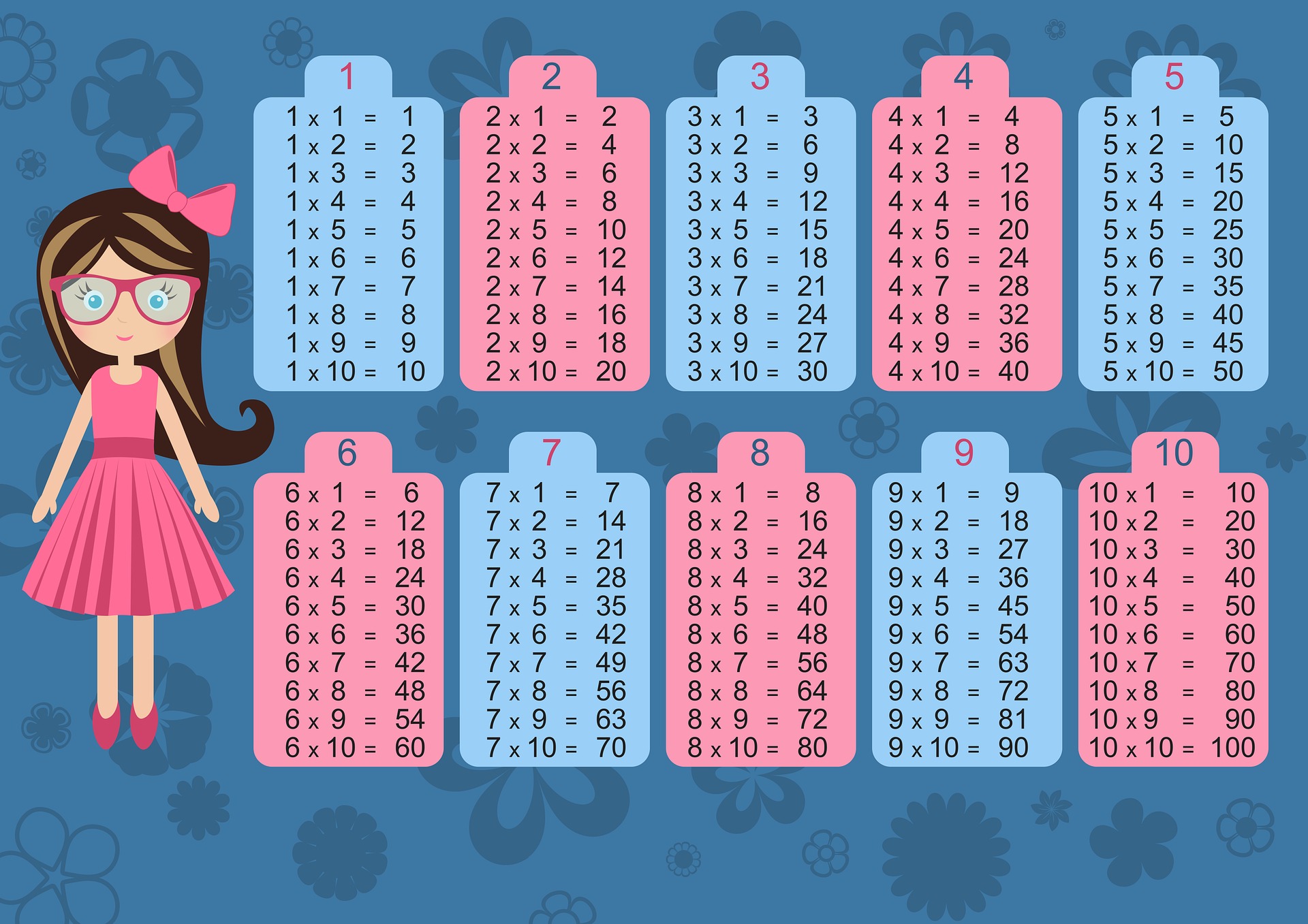
The Multiplication Tables Check (MTC) is a national test taken by all Year 4 pupils in England every June. If your child is approaching Year 4, here is everything you need to know about the test, how it is scored, and how to help your child prepare with confidence.
The MTC was introduced by the Department for Education to make sure children have a solid grasp of their times tables by the end of Year 4. Knowing multiplication facts fluently is one of the most important foundations in maths — it underpins long division, fractions, percentages, algebra, and much more.
The check is not designed to cause stress. It is a short, low-pressure online test that helps teachers identify which children may need extra support before they move into upper Key Stage 2.
The MTC is taken on a computer or tablet in school. Here is the format:
The questions are generated to cover the full range of tables, with a heavier weighting on the 6×, 7×, 8×, 9×, and 12× tables, as these are typically the hardest to learn.
Each correct answer scores one mark, giving a maximum score of 25 out of 25. There is no pass or fail — the score simply tells the school how well your child knows their tables. Results are shared with parents at the end of the school year, usually alongside the annual report.
Nationally, the average score tends to be around 20 out of 25, with many children scoring full marks. If your child scores lower, it simply highlights which tables need more practice — there is nothing to worry about.
The check covers multiplication facts from 2× to 12×. However, the questions are not evenly distributed. The harder tables appear more often:
This means your child should be confident across all tables, but extra practice on the 6–9 and 12 times tables will give them the biggest advantage.
The national curriculum expects children to know all their times tables up to 12×12 by the end of Year 4. However, times tables learning begins much earlier:
Starting regular practice in Year 3 gives your child a full year to build fluency before the check.
Five to ten minutes of daily practice is far more effective than long weekend sessions. Repetition is the key to committing times tables to long-term memory. Try practising during the car journey to school, at breakfast, or before bed.
Build confidence by mastering the 2×, 5×, and 10× tables first. Then move on to 3× and 4×, using the idea that 4× is simply double 2×. Once these are secure, tackle the trickier 6×, 7×, 8×, and 9× tables.
A printed multiplication grid (sometimes called a times table square) is a brilliant visual tool. Children can use it to spot patterns — for example, they will notice that the 9× table digits always add up to 9, or that the 5× table always ends in 0 or 5. Print one out and stick it on the fridge or in their bedroom.
Turn practice into a game. Try:
Most children find the same facts difficult. These are the ones to drill most often:
Simple shortcuts help children who get stuck:
The MTC is designed to be straightforward. On the day:
At StudyBox, we build times tables practice into every maths lesson. Our tutors use a combination of timed drills, interactive exercises, and personalised worksheets to make sure each child is confident and fluent. Whether your child needs to start from scratch or just wants to sharpen the trickier tables, we can help.
Book a free trial lesson at one of our centres in Wallington, Sutton, or Croydon and see the difference focused practice makes.

Reading is a vital skill for children to learn as they’re going to need it in their everyday life. Even if they’re not reading books, your child will have to read instructions on the board at school and on test papers. Not being able to read can often make children feel isolated from peers and create low self-esteem. However, if you keep encouraging your children to read, it can expand their imagination as well as their vocabulary and grammar – as well as improve their spelling. Books are a great way to do this as they provide engaging stories and expose children to different sentence types and vocabulary that they can use in their own writing.
Some students are reluctant to read as they find it boring and difficult. To help combat this issue it is often helpful to start reading books with interesting covers, with pictures that are about stories they recognise or that friends are already reading.
For example, a book many children want to read is the Harry Potter series. This is because it is a well-known story that many other children they know have read, as well as having movies that children have often already seen. These types of books are then more accessible to children.
If books like this still don’t gain your child’s interest, it can often help to choose a book to read together. You can then take turns reading a paragraph each or each reading a different character’s part. This is something I do when my students are reluctant to read as it makes them feel like they are reading less and makes the activity more engaging.
Here’s a more recent blog post about how to improve a child’s concentration. Click Here.
Understanding what they have read is an important skill that children will need, especially when they begin taking exams. To make sure your child has understood what they’ve read it can be a good idea to ask them questions after they have read each chapter – this can be done straight after they’ve read it or a little while afterwards. The more they remember over a period of time the more you know that they have understood what they’re reading.
Another relevant blog about the importance of reading skills! Click Here.
At StudyBox students are often encouraged to complete comprehensions during the lesson – something they will have to do in their SATs in year 2 and 6. The students who read at home often find the comprehensions easier to complete. This increases the child’s confidence in their own abilities as they know that this is a task that they can complete well.
We’re a tuition company based in Sutton, Wallington, Croydon & Battersea. Would you like to know more about our free trial? Click Here.
We continue to write engaging blogs, weekly. Click Here.
Annabel Yates,
English Tutor at StudyBox
We’ve all heard about or are experiencing first hand the recent reforms to the education system, starting with the way in which 16-year-olds are tested at the end of year 11.
Teens are being challenged like never before, so it is important to know how the new GCSEs work, to understand what students are experiencing this summer.
The government wanted to make these changes so that the new GCSEs would be more ‘demanding and challenging’ for students. The new, two-year course aligns more with the essay based, analytical and evaluative skills needed at A-level. This is better preparing students for their future.
It also makes tests ‘fairer’, the government argues, through the limited coursework, there is across the curriculum. Previously, coursework has been varied and dependent on the school’s teaching methods. This way, everyone has the same chance at the end of two years to show their skills off in an exam.
The government changed the grading system to give more opportunity for students of all abilities to achieve higher. Students may now achieve a standard or a strong pass, allowing those who achieved a grade C under the old system to be rewarded a higher grade. Similarly, higher achieving students can now strive further for something higher than an A*, so a level 9 was created.
Firstly, grades are different. Instead of A*-U grades, they have been replaced with 9-1, where nine is the highest grade achievable. A grade 9 will be harder to achieve than an A* and, now, both a grade 4 and 5 is viewed as a pass. A 4 will be a standard pass and a 5 will be a strong pass. Pupils will need to re-take English Language and Maths exams in the next years if they don’t achieve a 4 or above.
Coursework is also different too. Only in subjects where it is crucial to show skill, such as drama and dance. This makes the final exam at the end of the two-year course more important than ever.
Other changes will include compulsory double or triple science (foundation or higher), a single science will no longer be available.
One thing to remember in the face of the new GCSEs is that we are all in this together. This is new to every parent; student and teacher so don’t panic!
Prepare for an exam in whichever way is best for you; be it flashcards, posters, past papers or any other way that makes you comfortable. Little and often is always good when revising, and be sure to take necessary breaks.
Remember, you have a great long summer ahead of you, which will make the work you put in now all the more worthwhile!
You can read more about this topic on the AQA website. Click Here.
Harriet Nokes,
GCSE Tutor at StudyBox
Why not contact your local StudyBox GCSE tuition centre for a Free Trial.
More important GCSE information. Click Here.