
3 ways to kick-start your child’s revision

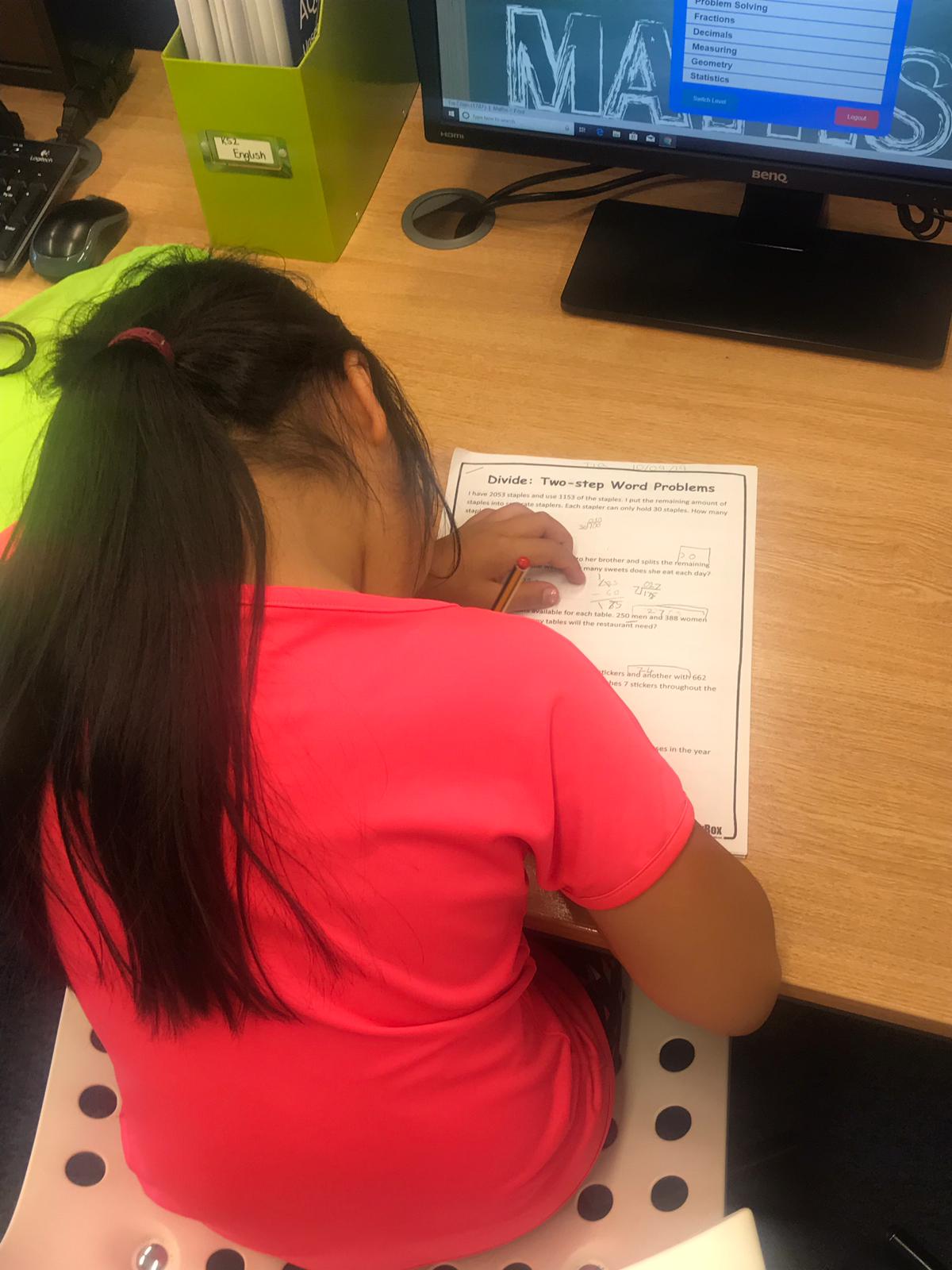
Image of a child completing schoolwork.

Exam season is fast approaching, and whether it’s SATs, GCSEs or the 11+, your child will start preparation soon.

It’s normal for children, as well as parents, to worry about exams!

But with the right revision and preparation, revision has never been so easy…

Here’s 3 ways to kick-start your child’s revision:

Planning

  • Mapping out the time before your child’s exams will provide an indication of how long there is for completing revision.
  • You can make a timetable together and record the key exam dates.
  • Try adding a schedule to the timetable, like how many hours to spend revision and on which days.
  • Don’t forget to include study breaks on the timetable, too!

Create a study environment

  • Dedicate a special place where your child can revise and complete schoolwork.
  • Creating a quiet and secluded environment will ensure that there are no distractions.
  • This means that information can be retained easily and work completed effectively.
  • Make sure they have all the supplied needed for studying so they won’t have to get up and get distracted.

A healthy lifestyle

  • Helping your child maintain a healthy lifestyle will benefit them when it comes to schoolwork.
  • Setting a time for bed every night will create a routine and ensure they are not tired for a productive day’s work!
  • A balanced diet also has an impact on the body and mind. This includes fruit, vegetables, fish, meat and carbohydrates. Nutritious breakfasts are also important in the lead up to and the morning of exams.
  • Don’t forget to encourage them to drink lots of water, too!

Exam season doesn’t have to be daunting, and with the right planning and preparation your child will feel more confident.

3 ways to kick-start your child’s revision will help with their work ethic and organisation.

It’s not just about revision, it is also important to maintain a healthy lifestyle and have a peaceful setting to revise in.

3 effective ways to improve your child’s concentration

Image of a child with a tutor at one of our centre's.

Understanding how children learn and memorise information can help us to improve their education.

The way that children’s brains are wired is completely different to adults, which is why children’s attention spans are typically shorter.

Have you ever wondered how you can improve your child’s attention span so that their focus can improve when learning?

Try our 3 effective ways to improve your child’s concentration:

Playing focus games

You can make learning fun by incorporating games into daily activities. Try playing card games like ‘Memory’ or puzzles like Sudoku or Crosswords, these will improve attention span as well as focus. If you take away electrical gadgets like smartphones and tablets it will be less distracting, allowing your child’s concentration to be solely on the activity.

Create a distraction-free zone

By creating a distraction-free environment, your child will have somewhere dedicated for studying and completing work. This is a space where they can focus on the task they are completing without being tempted by the TV, mobile phones or other distracting electronics. Create an environment that is comfortable and calming for your child so that it makes the tasks enjoyable. If they concentrate best by listening to calming music, then why not try putting on soft background music. Make sure everything that your child needs is accessible so they don’t have to get up and search for anything.

Set a routine

By creating a timetable for daily activities, your child will have a structure to follow and know what they need to complete. If there’s a set time for completing homework, having dinner and other activities like reading, it can help to program their mind so they are aware of what they need to get done. This will also help with time management and organisation!

You can help your child with their concentration skills a number of ways! Training children’s brains to focus is something that will benefit them throughout their life. Concentration can be improved through brain training games, creating a peaceful environment for completing tasks and setting a routine to follow.

3 ways to help your child at home with their work

StudyBox students working out math problems.

As a parent, there are many things you can do at home to help your child with their school work.

If you’re wondering what you can do to improve education, why not try our 3 ways to help your child at home with their work:

Healthy Lifestyle

  • Ensure your child is getting enough sleep. It’s recommended that children need between 8 and 12 hours of sleep every night.
  • A healthy, balanced diet will improve the way your child functions. For example, calcium and Vitamin D helps strengthen bones and growth, iron is good for cognitive ability and Omega 3 helps the brain to function.
  • Lots of fruit and vegetables are important, as well as meat, fish and wholegrains.

Routine

  • Establishing a routine for your child will help them be organised and have structure in their day-to-day life.
  • This can be making sure they pack a school bag the night before, completing homework the day it is set and having a regular bed time.
  • Try setting a morning routine: enough time for having breakfast, brushing teeth and getting dressed. And an evening routine: set a time for completing homework, a set dinner time and time for winding down in the evening.

Education

  • Reading with your child at home will improve vocabulary, imagination and pronunciation. You can read a few pages per night together. If they are confident reading alone, then try encouraging them to read a few pages of a book every night before bed.
  • Complete homework together. You can teach them new concepts and provide any extra help when needed.
  • Additional tuition. If there’s any subjects that are more challenging over others, why not consider after-school tuition? At StudyBox, we provide 1-1 support with tutors tailored to each individual student.

There are plenty of opportunities as a parents to help your child at home with their education.

Try our 3 ways to help your child at home:  assisting with schoolwork,  setting a routine to help time management and completing tasks, and maintaining a healthy lifestyle by getting plenty of sleep and having a healthy diet.

If your child needs any extra help in difficult subject areas, why not consider additional tuition with StudyBox?

Finding the right learning style for your child

Child doing a maths equation.

Everyone learns differently.Which is why finding the right learning style for your child will help you to support and assist with their learning effectively.

As a parent, you can apply their individual style and use this method to help them learn!

Visual

  • Learning by seeing.
  • This learner benefits by looking at pictures and imagery.
  • If your child is a visual learner, they may enjoy drawing or writing out notes. Anything visual, like examples or colourful notes, will help them to remember concepts and ideas.

Study tips:

  • Create colourful notes for studying.
  • Draw mind maps, graphs and pictures.

Auditory

  • Learning by hearing.
  • This means that learning through sounds and music.
  • If your child learns best through talking aloud, they may be an auditory learner.
  • Auditory learning can also involve music to help with schoolwork or listening to instructions.

Study tips:

  • Playing music whilst your child is studying might help them to remember notes.
  • Try talking out notes aloud to speed up the process.
  • Creating songs about study notes may help your child memorise effectively.

Kinaesthetic

  • Learning by doing.
  • This person learns by touching and movement.
  • Kinaesthetic learning includes being good at sports and physical activities.
  • It also involves learning through hands-on activities.

Study tips:

  • Try drawing out images or writing out notes for easier memorisation.
  • You can act out scenarios with your child to help them revise.
  • Try to create learning games to make the activity fun.

Logical

  • Learning through logic.
  • This learner understands through reasoning and numerical problem solving.
  • Understanding the logical reason behind ideas helps this type of learner make sense of things.
  • Logical learners usually learn best by following a set of rules or instructions.

Study tips:

  • Create word problems to help your child make sense of the question.
  • Problem solving, like test and equations, is the best way to test material.

Social

  • Learning by talking and interacting.
  • The person learns by communicating and working in groups.
  • A social learner will benefit from role playing, working on projects or communicating with others.

Study tips:

  • Organising study groups will help a social learner to share ideas and work collaboratively.
  • Try engaging with your child by talking through concepts and material.
  • You can have a discussion or debate and challenge them, helping to form arguments and remember key points.

Identifying how your child learns best can help you to assist them with learning the most effective way possible. For example, if they are a visual learner, drawing out mind maps with revision notes can help them by seeing the information in front of them.

They can apply the way they learn to any situation by adapting the material to their learning style. This will stay with them for life, as they can learn effectively through using their own, unique method with the task they are set.

For other learning techniques, like engaging children with their learning, read more on our blog.

Improving your child’s vocabulary at home

Image of a dictionary.

Improving your child’s vocabulary at home will help them to succeed in future!

Encouraging your child to expand on their vocabulary from a young age is essential.

It will help them to communicate effectively and make a difference with school work.

Having an expansive vocabulary is beneficial for writing, exams and general communication.

As a parent, you can improve your child’s vocabulary at home! Here’s how:

Reading for pleasure

  • Encourage your child to record a list of new words they’ve found.
  • Revisit those words weekly.
  • They can use the new words in their day-to-day vocabulary, helping them be remembered.

Audiobooks/educational programmes

  • Audiobooks are an effortless way way to educate your child!
  • Hearing how new words sound will help with pronunciation and memorising them.
  • Programmes can be beneficial with learning new vocabulary, too.
  • Seeing how the words are pronounced whilst hearing them helps with remembering them.

Spelling lists

  • Create spelling lists to constantly teach new words.
  • These can be daily or weekly to implement new vocabulary.
  • Going over the misspelt words will help your child with memorisation.

Regularly teaching new words

  • Try teaching your child a new word every week, or even every day.
  • Use this word throughout the day/week and encourage them to use it in a sentence.
  • You can find new words in a dictionary or use a website/app for generating them.

Playing word games

  • There are numerous word games that can improve vocabulary.
  • Board games, like Scrabble, or apps like ‘7 Little Words’ are a fun way to build up useful keywords!
  • You can make up games to play, like seeing how many synonyms you can make from a word.
  • For example, take the word ‘hungry,’ you can make ravenous, famished, starving, peckish, and so on…

There are endless ways for improving your child’s vocabulary at home.

Using exciting vocabulary when having a conversation, playing word games and encouraging reading for pleasure are just a few ways to do this.

A wide vocabulary has numerous benefits, so why not  expand on language from a young age!

How to Subtract Fractions: A Step-by-Step Guide

Pie Chart Fractions Maths 2020

Subtracting fractions is one of the trickier topics in primary school maths, but it follows a clear set of rules. Once your child understands the method, they can apply it to any subtraction — whether the denominators are the same, different, or the fractions are mixed numbers. This guide breaks it down step by step.

The Key Rule: Denominators Must Be the Same

Before you can subtract fractions, the denominators (bottom numbers) must match. This is the single most important rule to remember:

  • If the denominators are already the same → subtract the numerators (top numbers) directly.
  • If the denominators are different → find a common denominator first, then subtract.

Step 1: Subtracting Fractions with the Same Denominator

When both fractions have the same denominator, subtraction is straightforward — simply subtract the numerators and keep the denominator the same.

Example 1

5/8 − 3/8 = ?

  • Denominators are the same (8), so subtract the numerators: 5 − 3 = 2.
  • Answer: 2/8, which simplifies to 1/4.

Example 2

7/10 − 2/10 = ?

  • Subtract the numerators: 7 − 2 = 5.
  • Answer: 5/10, which simplifies to 1/2.

Step 2: Subtracting Fractions with Different Denominators

When the denominators are different, you need to find a common denominator — a number that both denominators divide into evenly. The easiest method is to find the lowest common multiple (LCM) of the two denominators.

Example 3

3/4 − 1/3 = ?

  1. Find the LCM of 4 and 3. The LCM is 12.
  2. Convert both fractions:
    • 3/4 → multiply top and bottom by 3 → 9/12
    • 1/3 → multiply top and bottom by 4 → 4/12
  3. Subtract: 9/12 − 4/12 = 5/12.

Example 4

5/6 − 1/4 = ?

  1. LCM of 6 and 4 is 12.
  2. Convert:
    • 5/6 → multiply by 2 → 10/12
    • 1/4 → multiply by 3 → 3/12
  3. Subtract: 10/12 − 3/12 = 7/12.

Step 3: Subtracting Mixed Numbers

A mixed number has a whole number part and a fraction part (like 2 1/3). To subtract mixed numbers:

Method A: Convert to Improper Fractions

  1. Convert each mixed number to an improper fraction.
  2. Find a common denominator if needed.
  3. Subtract.
  4. Convert back to a mixed number.

Example 5

3 1/2 − 1 3/4 = ?

  1. Convert: 3 1/2 = 7/2 and 1 3/4 = 7/4.
  2. Common denominator (4): 7/2 = 14/4.
  3. Subtract: 14/4 − 7/4 = 7/4.
  4. Convert back: 7/4 = 1 3/4.

Method B: Subtract Whole Numbers and Fractions Separately

Sometimes it is simpler to subtract the whole numbers first, then the fractions:

Example 6

4 2/5 − 2 1/5 = ?

  • Whole numbers: 4 − 2 = 2.
  • Fractions: 2/5 − 1/5 = 1/5.
  • Answer: 2 1/5.

This method works well when the first fraction is larger than the second. If not (e.g., 3 1/4 − 1 3/4), you need to borrow from the whole number, which is where Method A is simpler.

Subtracting a Fraction from a Whole Number

To subtract a fraction from a whole number, convert the whole number into a fraction first:

Example 7

3 − 2/5 = ?

  1. Convert 3 to fifths: 3 = 15/5.
  2. Subtract: 15/5 − 2/5 = 13/5 = 2 3/5.

Always Simplify Your Answer

After subtracting, check whether your answer can be simplified by dividing the numerator and denominator by their highest common factor:

  • 6/8 → divide both by 2 → 3/4
  • 4/10 → divide both by 2 → 2/5
  • 9/12 → divide both by 3 → 3/4

Common Mistakes to Avoid

  • Subtracting the denominators. Only the numerators are subtracted — the denominator stays the same (or becomes the common denominator).
  • Forgetting to convert. If the denominators are different, you must find a common denominator before subtracting.
  • Not simplifying. Always check if your answer can be reduced to its simplest form.
  • Converting mixed numbers incorrectly. To convert 2 3/4 to an improper fraction: (2 × 4) + 3 = 11, so it is 11/4.

Practice Problems

Try these at home with your child:

Same Denominator

  • 7/9 − 4/9 = ? (Answer: 3/9 = 1/3)
  • 11/12 − 5/12 = ? (Answer: 6/12 = 1/2)

Different Denominators

  • 3/4 − 1/6 = ? (Answer: 9/12 − 2/12 = 7/12)
  • 2/3 − 1/5 = ? (Answer: 10/15 − 3/15 = 7/15)

Mixed Numbers

  • 4 1/3 − 2 1/6 = ? (Answer: 2 1/6)
  • 5 − 2 3/8 = ? (Answer: 2 5/8)

Related Reading

How StudyBox Can Help

Fractions are one of the topics our maths tutors work on most with KS2 students. At StudyBox, we break down every step, use visual aids to build understanding, and give children plenty of practice until the method becomes second nature.

Book a free trial lesson at one of our centres in Wallington, Sutton, or Croydon.

Helping children with their spellings

Student and Tutor

The English language can be challenging to grasp, especially for children learning how to spell. Helping children with their spellings doesn’t have to be difficult though!

Try these tips for making spelling that little bit easier for you child.

Learning letter patters

  • I before E except after C. The letter i usually comes before e in a word, however there are a few exceptions to this rule, like seize, weird, science…
  • It can be useful to teach children common word endings (called suffixes). Teaching the common word endings, like “-een” “-ough” “-tion” “-ue” “-cian” will help children to remember the spellings  more easily.
  • Some words don’t follow any rules or patterns so they have to be memorised, for example the b in ‘subtle’ is silent.
  • Some double letters can’t be heard, like ‘accommodation’ and ‘disappoint,’ so learning the spellings for these is useful.
  • Homonyms are words that sound the same but have different meanings, like ‘your’ and ‘you’re.’ These must be learnt as two separate meanings, to avoid confusion. The apostrophe in ‘you’re’ stands in place for ‘are,’ so this is a different meaning to the direct address using ‘your.’

Top tips:

  • Reading: reading allows spelling to be learnt easily without realising, as well as improving vocabulary.
  • Mnemonics: mnemonics involves using imagery or patterns, which ca help to remember spellings. Try learning acronyms, like ‘because’ can be remembered as as ‘Big Elephants Can’t Always Understand Small Elephants’, or the word ‘necessary’ has one c and two s’, which can be remembered by comparing it to a shirt, which has one collar, one c, and two sleeves, two s’.
  • Spelling lists: create a new spelling list every week and test your child on it. You can make this fun by creating themed spelling lists, for example one on seaside-related spellings. Writing out the spellings over and over again, especially the incorrect ones, will help with memorising and perfecting them. It may be beneficial to keep a list or notebook to record all the spellings that have been learnt, then you and your child can return to the list to recap.
  • Sounding out words: sounding out difficult words can help to break them down when spelling them, like February can be broken down into Feb-ru-ary, or Wednesday can be Wed-nes-day.

Helping children with their spellings has never been easier. Learning spelling patters and rhymes allows certain spellings to be remembered with ease. For some tricky spellings, there is no pattern, like words with silent letters – so these ones have to be memorised. Testing your child on their spellings by giving them weekly spelling tests will help them to remember spellings and letter patterns. For those tricker spellings, make a note of them and go through them together until they are perfected!

Click here for a list of challenging spellings to test your child on.

3 ways to engage children with learning

Different learning approaches

Keeping children’s focus and maintaining their full attention can be challenging when it comes to learning. This is because not all children will be motivated in every subject they do. This is why trying a range of techniques can be useful for maintaining interest with the topic being taught.

Here are 3 ways you can engage children with their learning:

Monitoring your child’s progress

Going through work with your child that they are currently working can help keep on track with their progress.  Perhaps try talking to them about their day at school. Ask questions like:

  • What did you learn?
  • What did you think about the topic?
  • Did you find it challenging or easy?

Anything they struggle with you can recap together. This will help your child to understand the subject as well as reflect upon their learning.

As well as reflecting on the challenging material, ask them what their favourite subject(s) are. You can encourage and motivate them in what inspires them, too!

Rewarding efforts with positive encouragement 

Children are constantly learning and like to be rewarded when they’ve been working hard. Helping them recognise that they are progressing with learning and doing well will encourage them in education.

Rewarding can be given in many forms, either something tangible like a treat or in verbal praise, maybe an activity or day out.

These rewards can also vary depending on what has been achieved, for example verbal praise can be given when they have aced a spelling test. Something larger, like a fun day out can be for achieving top marks in an exam or a positive report card.

Different learning approaches

Discover whether your child learns best through auditory, kinaesthetic or visual learning. Auditory learning concerns learning through hearing, whether it’s listening to music which aids the learning process or repeating study notes aloud. Kinaesthetic learning is learning by doing, this could be acting out something or creating something, like colour coded notes. Visual learning when the learner helps by seeing what is being taught. This type of learner can write out notes, create a poster or draw.

Knowing how your child learns best is a step towards engaging them with learning. Everyone has a unique way of learning so identifying how your child learns most effectively will make learning fun and achievable. Keeping on track with their learning by knowing what they are being educated in and asking them how they feel about the material. This will help to identify which areas they need help in and offer positive encouragement to reward when they are doing well.

If you’re looking for other strategies to help with your child’s learning, like how to mitigate your child, read more on our blog here!

If you’re interested in the 3 ways to engage children with learning, read more about learning engagement theories here.

Alternatively, if your child would benefit from personalised support to help them thrive academically, get in touch to discuss our tutoring services at our UK centres or book a free trial.

6 ways to help motivate your child

Image of a lightbulb.

Motivating your child with learning and education doesn’t have to be a challenge. There are many ways parents can help their children stay on track with school work and learning, through monitoring progress, positive encouragement and being supportive.

Here are 6 to help motivate your child throughout their learning:

  1. Organisation

  • Pack a schoolbag the evening before.
  • Complete homework the day it is set.
  • Keep a diary or calendar of important dates.
  • Create a study timetable.
  • Create a list of tasks to be completed.
  1. Punctuality

  • Establish a routine. Try setting a time for completing homework, a time for dinner and a strict bedtime schedule.
  • Plan ahead.
  • Focus on a goal or objective to complete e.g. achieving predicted grades.

  1. Reading

  • Reading for pleasure expands vocabulary,
  • Ir enhances creativity.
  •  It improves spoken and written English.


  1. Study skills

  • Complete past papers.
  • Learn how to process and organise information.
  • Prioritise tasks in order of importance.
  1. Knowing important dates

  • Make a list of important dates.
  • Write dates somewhere visible to be reminded of them.
  • Work towards the important dates allowing time to be managed effectively.


  1. Private tuition

  • Specialised tutors can assist in areas children need help in.
  • Work towards goals together, whether it’s GCSEs, SATs or the 11+.
  • Lessons tailored to the individual helping to stay on track and be motivated to learn.

Trying different approaches to motivate your child with learning is good for keeping on track with academic progress. For ideas on how to make learning fun for children, look at our blog here.

Read more about science-based approaches on motivating children here.

How to Develop Critical Thinking Skills in Children

Image explaining critical thinking.

Critical thinking is one of the most important skills a child can develop. It helps them analyse information, solve problems, make decisions, and form their own views — abilities they will use every day at school, at home, and throughout their lives.

The good news is that critical thinking is not something children are simply born with or without. It can be taught, practised, and strengthened at any age. Here is how.

What Is Critical Thinking?

Critical thinking means looking at information carefully before accepting it. Instead of just memorising facts, a critical thinker asks questions like:

  • Is this true? How do I know?
  • What evidence supports this?
  • Could there be another explanation?
  • What would happen if I tried a different approach?

In her book Mind in the Making, researcher Ellen Galinsky identifies critical thinking as one of seven essential life skills every child needs. She argues that while children need to learn facts and concepts, they also need the ability to evaluate, analyse, and apply what they learn.

Why Critical Thinking Matters at School

The modern curriculum increasingly rewards critical thinking. In GCSE English, students must analyse texts and evaluate arguments. In science, they design experiments and draw conclusions from data. In maths, multi-step problem-solving questions test reasoning, not just calculation.

Children who can think critically tend to:

  • Perform better in exams that require analysis and evaluation.
  • Write stronger essays with well-supported arguments.
  • Approach unfamiliar problems with confidence rather than panic.
  • Become more independent learners who do not rely on being told what to think.

7 Ways to Encourage Critical Thinking at Home

1. Ask Open-Ended Questions

Instead of questions with a yes/no answer, ask questions that require thought:

  • “Why do you think that happened?”
  • “What would you do differently next time?”
  • “How do you know that is true?”
  • “What might happen if…?”

These questions teach children to reason and explain, not just state facts.

2. Let Them Struggle Before Helping

When your child faces a challenge — a tricky homework question, a puzzle, or a disagreement with a friend — resist the urge to solve it for them immediately. Give them time to think it through. Struggling with a problem (within reason) is how critical thinking develops.

You might say: “I can see this is hard. What have you tried so far? What else could you try?”

3. Encourage Them to Consider Different Perspectives

When reading a story or watching the news together, ask: “How might the other person feel?” or “Why might someone disagree with this?” This builds empathy and teaches children that most situations have more than one valid viewpoint.

4. Play Strategy Games

Board games and card games that require planning and decision-making are excellent for critical thinking. Games like chess, draughts, Cluedo, and Settlers of Catan force children to think ahead, weigh options, and adapt their strategy based on new information.

5. Discuss Real-World Problems

Talk about everyday decisions as a family: “We need to plan meals for the week — what should we consider?” or “Should we drive or take the train? What are the pros and cons?” Involving children in real decisions gives them practice with reasoning and evaluation.

6. Encourage Curiosity and Research

When your child asks a question you do not know the answer to, look it up together. Show them how to find reliable information, compare sources, and check facts. This builds the habit of investigating rather than accepting the first answer they find.

7. Model Critical Thinking Yourself

Children learn by watching. When you are making a decision, talk through your reasoning out loud: “I am going to compare these two options because…” or “I read this article, but I want to check another source before I believe it.” This normalises the process of thinking carefully.

Critical Thinking Activities by Age

Ages 5–7 (KS1)

  • Sorting and classifying: Give your child a set of objects and ask them to sort them into groups. Then ask: “Can you sort them a different way?”
  • Story predictions: While reading a book, pause and ask: “What do you think will happen next? Why?”
  • Spot the odd one out: Show four items where one does not belong and ask them to explain their reasoning.

Ages 7–11 (KS2)

  • Debate topics: Pick a simple topic (“Should children have homework?”) and ask them to argue both sides.
  • Mystery puzzles: Present a scenario with clues and ask them to work out what happened.
  • News discussion: Read a child-friendly news article and ask: “What is the main argument here? Do you agree?”

Ages 11–16 (KS3 and KS4)

  • Source evaluation: Show two articles on the same topic from different sources. Ask: “Which is more reliable? How can you tell?”
  • Ethical dilemmas: Discuss scenarios where there is no clear right answer — this develops nuanced thinking.
  • Study groups: Encourage them to explain topics to friends. Teaching someone else is one of the best ways to deepen understanding.

How StudyBox Develops Critical Thinking

Related Reading

At StudyBox, we do not just teach children what to think — we teach them how to think. Our tutors ask probing questions, encourage independent problem-solving, and guide students to explain their reasoning. This approach builds deeper understanding that lasts far beyond the next test.

Book a free trial lesson at one of our centres in Wallington, Sutton, or Croydon.
1 4 5 6 7 8 12